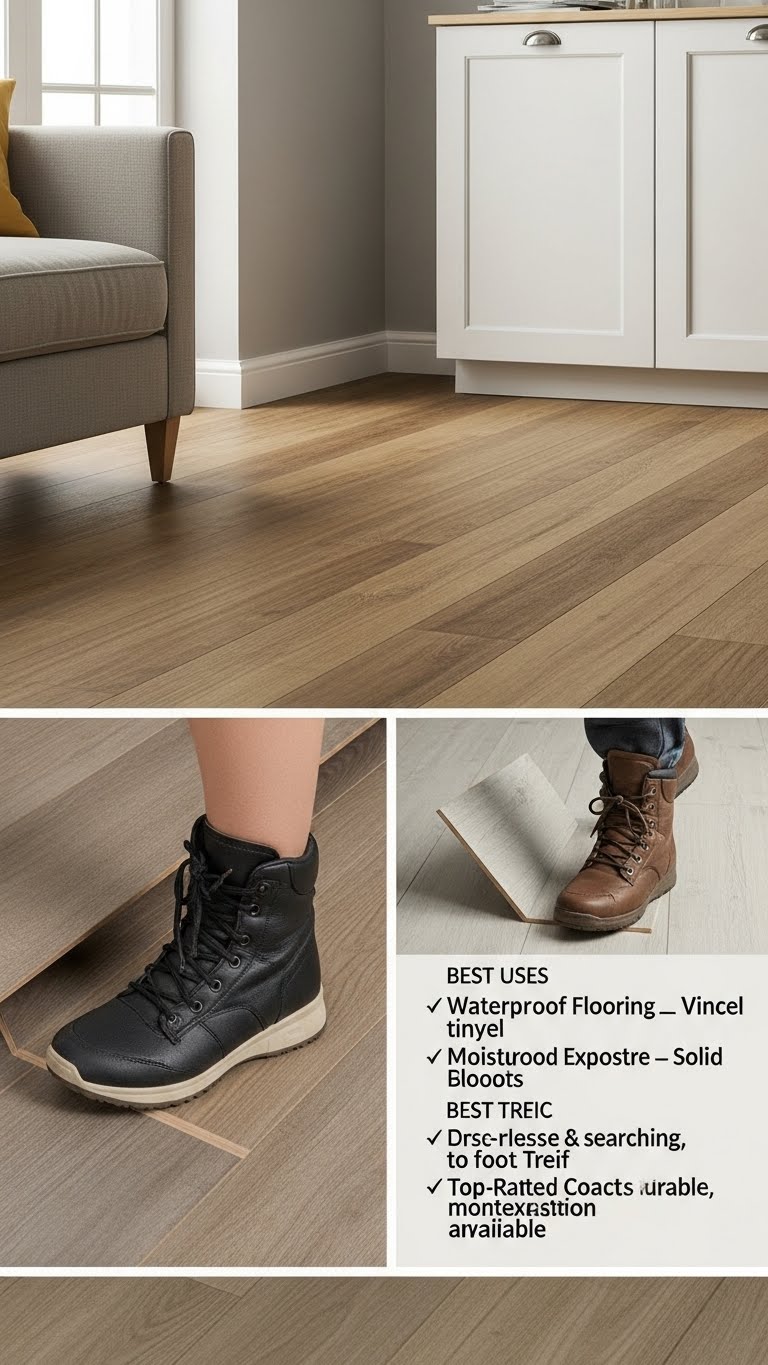
One step at a time, floors come in many shapes and materials, shaping how long they last, how hard they are to clean, or how nice they look. Not every surface handles spills the same – some laugh off water while others can’t stand dampness. Think about where you walk most, what your space feels like, and how much you want to spend before picking anything. Lately, people want something strong that doesn’t need constant care but still looks good doing it. This look at common floor choices shows which ones fit certain rooms, why some work better than others, and names real products liked across the UK.
Water resistant floors handle bathrooms plus kitchens well – Luxury Vinyl Tile stands up to spills better than most. Porcelain tile works just as hard in wet spots. Engineered wood feels right at home in living spaces where looks matter a little more. Bedrooms often go quiet with laminate underfoot, smooth yet tough enough. Places people pass through a lot lean toward LVT when durability counts. AC4-rated laminate holds its ground in busy zones without fuss. Carpet finds purpose on stair steps, softening every footfall along the way.
Floating across homes fast, Luxury Vinyl Tile sneaks in where spills fly – kitchens, baths, entries. Real look of timber or rock, minus the worry. No fear from puddles, pet claws, or muddy shoes. Warm on bare feet, unlike tile or laminate. Wipe messes without scrubbing hard. Built for families who live loud and clean quick.
Laminate flooring sticks around because it does not cost much plus holds up well, fitting households with kids or animals. Where you spend most time – like lounges, sleeping spaces, corridors, and front zones – is where it shines. Tough against scuffs, easy to set up without help, kind on budgets, handles busy spots without trouble – but skip using it where water gathers often. A solid pick unless moisture lives there.
A fresh look that mimics natural timber comes from engineered wood flooring, built with stacked layers for less shifting over time. Spaces like lounges, sleeping areas, or personal work zones handle it well; even kitchen use works when water gets wiped up fast. The surface wears genuine hardwood, links smoothly to heated floors below, handles damp better than solid planks, then later takes new finishes again.
Wood flooring made entirely of solid pieces stands as a high-quality choice, boosting a home’s worth over time. Living spaces and sleeping areas often suit it best because its look never fades. Over years, you might sand it down several times, giving it fresh finishes when needed. It holds up well, sometimes lasting many decades without weakening. Still, shifts in humidity or heat can cause problems if ignored.
Cold floors? Not here – ceramic and porcelain handle moisture without issue. Bathrooms, kitchens, even laundry spots lean on these tiles for solid performance. Tough enough for heavy foot traffic, they resist wear like few others do. Designs mimic real wood or natural stone, giving options beyond basic looks. When paired with heated systems below, the chill fades fast underfoot.
Lying underfoot, carpet stays a top choice for bedrooms, steps, and hallways because it feels cozy and holds heat. Soft to walk on, it also helps quiet sounds while offering many looks – yet needs regular care and won’t work where moisture lingers.
Water soaks into floors less when you pick Quick-Step Aquanto – this laminate clicks together fast, works in lighter business spots, and earns 4.6 stars from buyers. Real wood tops Home Choice’s engineered planks; rustic European oak wears a clear coat, feels natural underfoot, and sits at 4.6 after more than eight hundred customer thoughts. Fancy patterns show up in GoodHome Visby’s layout – the blocks lock in tight, heat flows well underneath, plus people hand it full marks again and again. Thick boards define Dartmoor Oak: tough enough for heavy foot traffic, resists spills nearly two days straight, built strong where life moves quick.
Wondering about good floor options for kitchen or bathroom spaces? Tile stands up well to water. Some people pick vinyl since it handles spills without fuss. Hardwood can work if treated properly against moisture. Each material brings its own strengths depending on how much wear it faces daily.
Underfoot comfort gives LVT an edge when bare feet matter. Kitchens and bathrooms demand surfaces that handle spills without worry – both materials deliver. One stays cool in winter, the other mimics warmth even on cold mornings. Scratches, moisture, heavy traffic – they withstand it all. Cleaning means wiping, nothing more. Porcelain holds up well, yet feels firm with every step.
What kind of floor holds up best where lots of people walk?
Flooring made from LVT or AC4 laminate stands up well in busy spots like entrances and corridors. When it comes to wear, these options resist scratches while keeping strength over time. Built tough, they manage constant walking without showing too much damage.
Is laminate flooring waterproof?
Floors made of regular laminate won’t block water completely. Yet a lot of newer types have centers that resist moisture, holding off leaks for around one or two days. These work well in rooms where people spend time. However, it’s best not to install them in areas with constant wet conditions like bathing rooms.
How do engineered wood floors compare with solid ones?
Starting off, engineered wood floors have a genuine hardwood surface attached over several lower layers. This setup handles dampness better compared to solid planks. On another note, solid wood comes entirely from one chunk of tree material. It allows many refinishing rounds over years. Yet it reacts strongly when air moisture shifts up or down.
Can flooring be used with underfloor heating?
Underfoot warmth works fine with engineered wood, LVT, laminate, or porcelain tile – these handle temperature shifts without trouble. Heat tends to make solid wood warp or gap, which is why it often does not suit such systems well.
Which floor type boosts a house price the most?
Wood floors built by engineering methods, alongside solid types, often boost home worth the highest. Their look feels rich. They resist wear well. These materials last many years. Appearance matters here. So does strength over time.
Is carpet a good choice for bedrooms?
Bedrooms often feel more inviting with carpet underfoot. Warmth seeps up through the fibers each morning. Softness meets your feet when stepping out of bed. Sound stays muffled, making late-night movements quieter. Air holds better between threads, helping rooms stay temperate. A sense of snug calm settles into spaces where pile cushions every step.

Leave a Reply