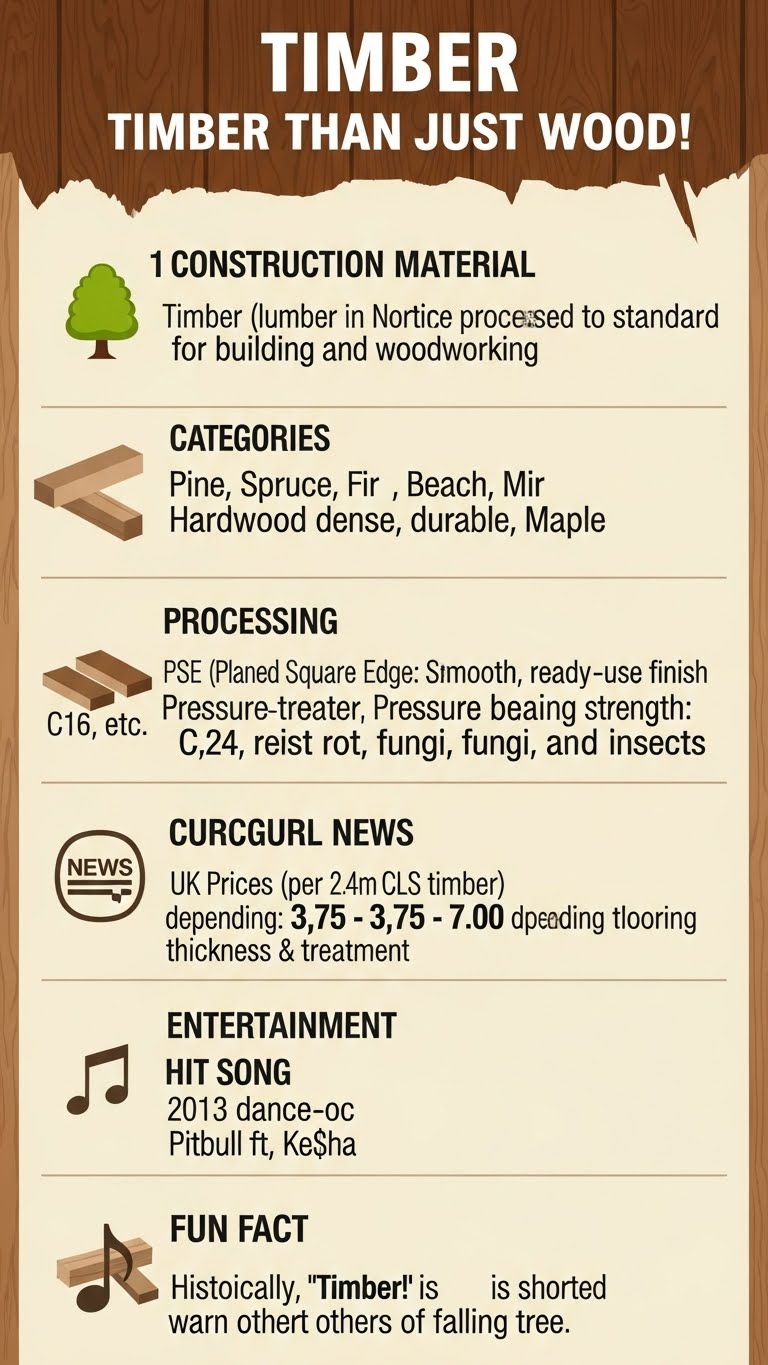
Wood cut for building work often goes by the name timber. Sometimes, depending on where you are, that word might mean trees still in the ground or freshly felled trunks. Around the world, people link it with eco-friendly structures, man-made wood panels, and new styles in architecture.
Wood shaped for building work goes by the name timber. This term shifts just a bit depending on where you are. Across the UK, Australia, and New Zealand, it means wood prepped for framing homes or crafting furniture. Over in North America, people tend to call untouched forest trees or freshly downed trunks timber, reserving the word lumber for what comes out of the mill. These naming quirks aside, one fact holds steady – this material builds much of the world around us.
Wood shows up everywhere in building – frames, roofs, floors, even outdoor steps. Its mix of toughness and low cost makes it a go-to choice. People pick it not just for price but because it bends well to different needs. Fences, cabinets, decks – all find their shape from this material. Sustainability plays a role too; forests can renew what we take. Inside homes, you’ll see it as doors, stairs, or built-in shelves. What sticks around longest often has roots in timber.
One kind of wood you often see? Sawn timber. It comes straight from the log, sized but left rugged. Finish does not matter here. Builders pick it when strength matters more than looks. Frames go up fast with this stuff. Roofs take shape without fuss. Surface texture stays raw on purpose.
Smoothed on every side, planed timber suits uses like shelves or furniture where looks matter. Finished edges come from a milling process known as PSE – short for Planed Square Edge. This type carries clean surfaces thanks to machine treatment. Often found in places needing neat woodwork, such as around doors or built-in units.
Wood that’s been soaked in protective chemicals stands up well to wet conditions, decay, and bugs. For things like patios, yard barriers, or backyard sheds, this version works best outside. It survives longer when exposed to rain or soil because of the treatment it gets early on.
Starting off strong, timber meant for structure gets sorted by how tough it is. Most often you will see C16 – good enough for everyday building jobs that need support. Then there is C24, tougher stuff with neater lines in the wood, picked when floors, walls, or big frames must hold more weight. Toughness matters where things rest on beams.
Out there in the UK, folks reach most often for 4×2, then 3×2, along with CLS when framing needs wood. Cost shifts – depends who sells it, if it’s treated, where it ends up.
A common timber option in Britain, like a 2.4-metre plank graded C24 and sized 4 by 2, usually costs between five fifty and eleven pounds
A piece of CLS studwork timber, sized 38 by 63 millimetres and two point four metres long, costs between three pounds fifty and four pounds
From £4.50 up to £6.50 for treated C16 wood sized 75 by 47 millimetres
Home building, updates around the house, also personal fix-up jobs often go with these measurements. These dimensions pop up a lot when people work on their own spaces, make changes inside walls, or handle small tasks by themselves.
Folks often look up places like B&Q, Wickes, or Travis Perkins when they need wood across the UK. Trusted names such as Jewson, Selco, and Savoy Timber pop up just as much. Then there’s Champion Timber, Fulham Timber, plus UK Timber and MKM Building Supplies – common choices too. You can get approved building-grade lumber through these sellers. Think CLS frames, pressure-treated planks, even custom lengths shaped on request. Trade pros pick stuff up here. So do people fixing things at home.
Wood shows up more often these days inside today’s building designs. Products like CLT and glulam make it possible to build taller structures – offices, homes, flats – with natural material instead of only steel or concrete. Strength matches demand, shapes stay open for creativity, safety holds during fires, all while cutting down pollution released into air. Countries across Europe back this shift deliberately through rules favoring eco-friendly methods on new builds.
What makes wood a green choice? When harvested the right way, it stands out among eco-conscious construction options. Trees replanted after cutting keep the cycle going, locking away carbon as they grow anew. Materials made from such sources hold onto that captured CO₂ during years of use. Look for labels like FSC or PEFC – these mark supply chains rooted in care and openness. Trust builds where origin can be followed step by step.
Out of the woods and into songs, timber pops up more than just in forests. A track by Pitbull with Ke$ha gave it loud life on radios everywhere. Not far off, a soccer team from Oregon carries the name proudly too. Seen here, heard there, it sticks in minds without trying hard. That kind of presence? It shapes what people type most online.
Got questions about timber versus wood? Here’s what sets them apart.
From trees comes wood, a basic natural stuff. Once cut and shaped for building, it becomes timber.
Imagine a type of wood built tough – C24 timber fits that picture. This isn’t just any lumber; it carries weight well, standing up in critical roles. Think floor supports or wall frames holding up structures. Strength runs deep here, making it trusted where safety matters most.
Is treated timber safe for outdoor use?
True. Since it handles dampness well, resists bugs, stays strong over time – treated wood fits outside work perfectly.
What about wood – does it cost less than steel or concrete?
Faster builds often happen with wood since it usually costs less at home sites compared to concrete or metal.
Leave a Reply