eight kinds of wood you actually need for building, crafting, or fixing things around the house. Some come from slow-growing trees, others from faster ones – each behaves differently when cut or shaped. One kind bends easily, another resists moisture better than most. You might be surprised how one type holds nails tighter than its look suggests.
Then there is the factory-made version, glued and pressed into flat sheets. Each has a role depending on weather, weight needs, or finish desired. Think twice before picking just any plank off the shelf. Not every wood handles outdoor exposure without rotting fast. The right pick depends less on price and more on what it must do.
Imagine different trees giving rise to distinct kinds of timber. Some come from deciduous forests, others from evergreen stands, while a few emerge straight from factory floors. Picking one type over another shapes how long something lasts, how it looks, or what it costs. Choices shift depending on whether leaves fall each year or stay green through winter months.
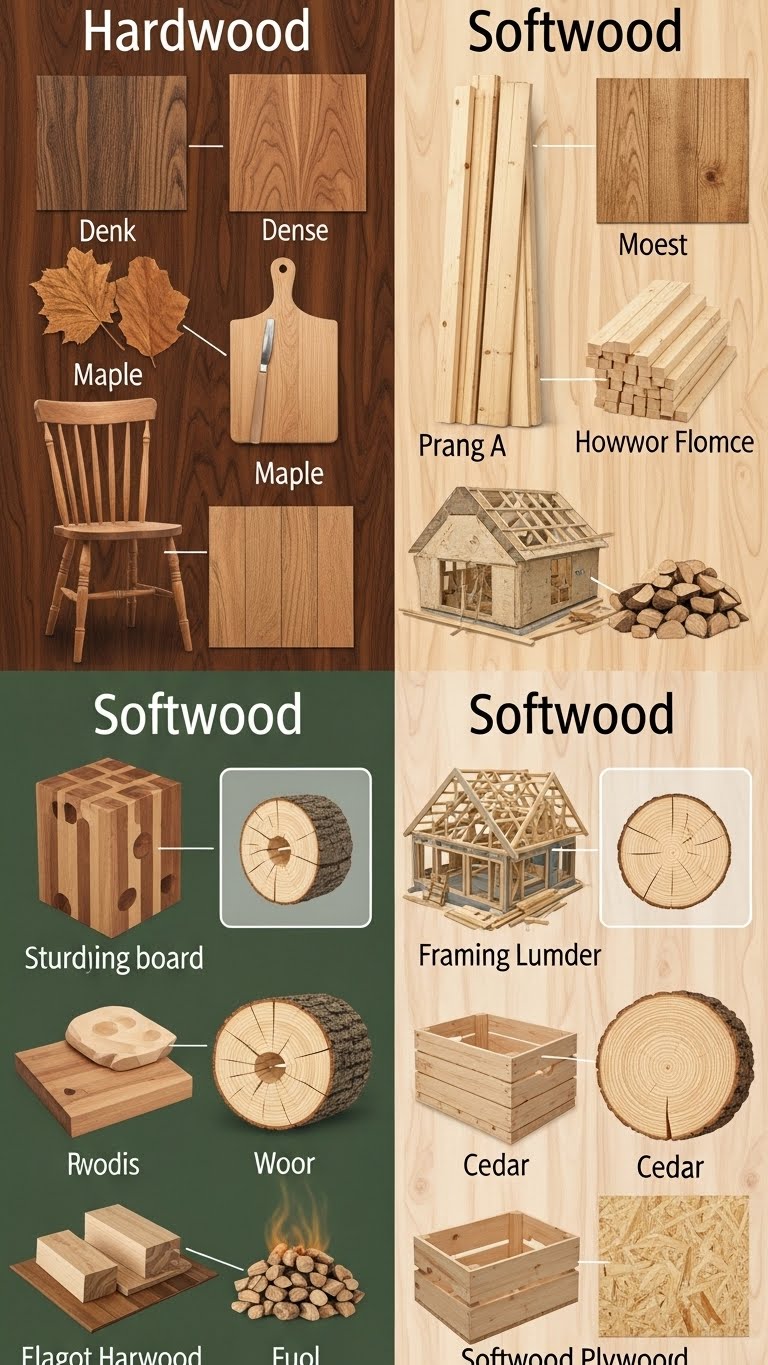
From trees that drop leaves every year comes hardwood. Tougher than most materials, it stands up well over time. Because of how tightly packed its fibers are, builders pick it for work meant to last. Furniture, floors, or cabinetry – this wood handles wear without giving in. Its resilience shows best when used where things get heavy use.
Starting strong, oak ranks among the toughest hardwoods you can find. Because it handles wear well and fights off insects effectively, people often pick it for long-term projects. Red oak shows up with a warm, reddish hue plus noticeable grain lines. On the flip side, white oak leans pale, packs denser fibers, and blocks water better. Floors get built from both types, along with cabinets and high-quality furniture pieces.
Hardness stands out most in maple, especially the kind known as sugar maple. Creamy tones run through it evenly, giving a clean look. This wood handles tough jobs well – think chopping blocks or busy lanes under rolling balls. Furniture made from it stays strong even when used every day.
Bold swirls run through walnut, deep in color like dark earth. Because of that natural look, craftsmen often choose it for high-end pieces meant to last. What stands out is how smoothly it cuts and shapes under a blade. Elegance comes naturally, so it finds homes in detailed carvings, wall coverings, or unique handmade goods.
Wood called mahogany stands out among tropical hardwoods. With a color that shifts toward rich red over time, its tight even texture catches attention. Moisture hardly affects it, neither does rot take hold easily. Because of these traits, builders choose it for boats, fine furniture, maybe even pianos. One reason musicians favor it lies in how sound moves through the material.
Oil-rich teak stands strong outside, fighting off dampness, bugs, and decay like nothing else. This warm-colored timber shapes itself into porches, boats, and backyard seats – leading by quiet example.
Pines and firs give us softwood, harvested from needle-bearing trees that thrive quickly. Because they grow fast, these woods cost less compared to slower-growing types. Their rapid growth means you can find them almost everywhere timber is sold.
A softwood choice that keeps costs low shows up often in everyday builds. Light to carry, predictable when cut, simple to shape – these traits lead to its use in house frames, storage units, wall coverings, plus affordable home furnishings. What stands out is how readily it adapts without slowing progress.
Out in the open, cedar holds up well because it is light yet strong. Its scent comes from oils inside that stop decay and keep bugs away. Because of this mix, people pick it most often for walls outside, steps, barriers between yards, boxes for keeping things safe. A favorite where weather hits hard.
Firm yet light, Douglas Fir stands up well under pressure. Built to stay straight, it handles heavy loads without twisting out of shape. Often found holding up walls or floors, this wood plays a key role where strength matters most. Tall buildings lean on its backbone for support across wide spans.
Wood pieces stuck together with glue create reliable building materials. These made-to-order items offer steady strength plus tailored results. Glue holds bits of timber in place for dependable output every time.
Built from thin wood slices stacked together, plywood forms tough panels that resist warping. These sheets show up everywhere – on rooftops, inside walls, under floors, even in cabinets. Strength comes from how the grain shifts between each layer. Furniture makers rely on it just as much as builders do.
A smoother finish often comes from MDF because its structure stays even throughout. Built tight, it holds shapes well when carved carefully. One benefit shows up clearly on painted surfaces – no streaks, no surprises. Cabinets gain clean edges due to consistent thickness edge to edge. Moldings twist and turn nicely since the material responds evenly under tools. Doors made from it stand flat without warping over time.
When budgets matter, chipboard often shows up first – think ready-to-assemble shelves or simple storage units. It’s not flashy, just functional, built to save money without lasting forever.
Pick wood that fits what you need it for. Hard types work well when you want something strong and good-looking, like floors or tables. For walls or basic builds where money matters, softer kinds make sense. Man-made boards give steady performance in special cases.
Think about how much water it might face, how tough it has to be, how much you can spend, also how you want it to appear. Using teak outside stands up to rain and sun. Walnut brings depth and grain into pieces meant to last generations. Douglas fir holds up structures without breaking the bank. Fit the material to the job, get better outcomes over time.
Every so often, someone asks about wood kinds. How do hardwoods differ from softwoods? Leaves drop every year from the trees that give us hardwood. Softwood arrives from cone-bearing trees that stay green all winter. Names can mislead – it’s really about how seeds form, not toughness. Often heavier, hardwood stands up well over time. That quality fits nicely in cabinets or floorboards. Softwood, on the other hand, shoots up quicker and weighs less. Builders reach for it when putting walls together because it saves money.
Pine sits at the bottom of the price list when it comes to real wood. Right behind it come softer types such as spruce or fir. If you’re looking into manufactured materials, chipboard usually costs even less. People often pick these options for building frames inside walls, simple cabinets, or anything where saving money matters most.
Hardwood comes from leafy trees – think oak, maple, or walnut. These stand apart because they shed leaves each year. Moving on, softwood grows on evergreen conifers such as pine, cedar, fir. They keep needles instead of broad leaves. Then there’s something made in factories: engineered wood. Plywood, MDF, chipboard fall into that group – not cut from trunks but built up from layers or fibers.
When it comes to outdoor furniture, what wood stands up best? Teak leads the pack because its rich oil content fights off decay, bugs, and dampness. Instead of teak, cedar brings strong outdoor performance too – its built-in oils resist rot while giving off a subtle scent. While both handle sun, rain, and cold without falling apart, one thing sets teak apart: it lasts longer.
Some folks pick walnut when building fancy furniture. Oak stands out because it lasts long and looks good over time. Mahogany brings rich color plus strength to serious builds. When something needs to resist dents, maple steps up quietly. Pine shows up in simpler designs where cost matters more than shine.
Leave a Reply